
The College of Engineering and Physical Sciences (CEPS) is a world-class college with top-tier research in environmental science, space science, and engineering. UNH's prestigious Land, Space and Sea Grant status proves beneficial to our ever growing dynamic research environment and our ability to attract external funding.
The faculty’s greatest pride, however, is their one-on-one relationships with their students. Undergrad and graduate students have the opportunity to work with faculty who have obtained niches of extraordinary high national and international research capabilities.

-
 Pulkit Dubey, IAM PhD StudentPulkit Dubey completed his bachelor's in mechanical engineering from BITS Pilani, India (2015) followed by master's from JNCASR, Bangalore, India (2019). During his masters, he worked on hydrodynamic instability of liquid jets where he studied the breakup of a liquid jet to form droplets. He also studied suspensions with non-spherical solute particles and…Learn More
 -
 Lihy Buchbinder featured in Research JournalLearn More
 -
 Reza Hojjaty Saeedy, IAM PhD studentReza Hojjaty Saeedy is a Ph.D. candidate working with Professor Richard A. Messner. His research field is biological signal processing in general and biologically inspired computer vision in particular. His dissertation work focuses on…Learn More
 -
 Grad student masters the art of data visualizationIn a darkened room filled with gigantic computer screens, Drew Stevens '17G types on the keyboard and watches the results: A blade of kelp that appears three-dimensional begins moving as if it’s underwater, the shape morphing and flowing back and forth. Stevens points out where small crustaceans can hide in the moving kelp blades, thereby avoiding larger predators.Learn More
 -
 DanaRose Brown is a one of a dozen students to be part of the inaugural class of the Bachelor of Science degree in Ocean Engineering. The New Jersey native and member of the UNH track & field team discusses why she chose ocean engineering and UNH.Learn More


Recent Stories
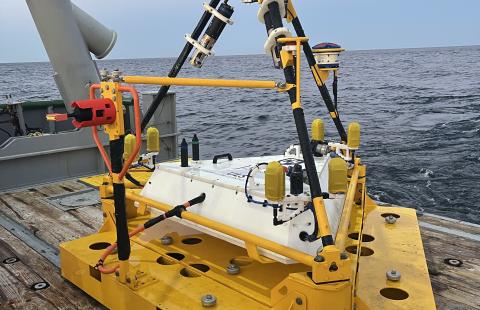
UNH Deploys Cabled Ocean Observing System Near Isles of Shoals
UNH Deploys Cabled Ocean Observing System Near Isles of Shoals
Real-time oceanographic and acoustic data will measure environmental conditions in Gulf of Maine
Article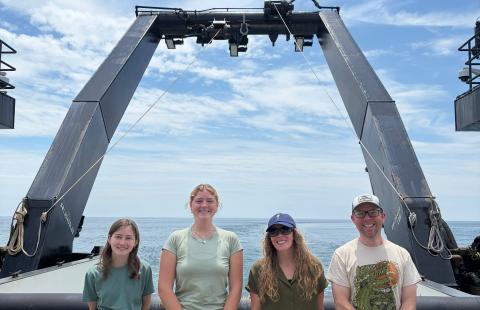
Research Cruise Tracks Ocean Acidification — and Expands Student Horizons
Research Cruise Tracks Ocean Acidification — and Expands Student Horizons
UNH students, researchers integral to success of this summer’s East Coast cruise
Article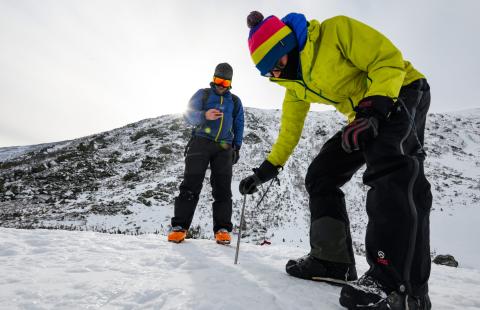
UNH Partners With New England-Wide Team to Advance Research on Snow and Outdoor Economy
UNH Partners With New England-Wide Team to Advance Research on Snow and Outdoor Economy
Snow STORE will advance regional snow and precipitation monitoring capabilities
Article